Cross-Border Permit Coordination Challenges for Nonprofit Gaming Events in Adjacent Jurisdictions
Written by Sage Foster · Oct 7, 2026
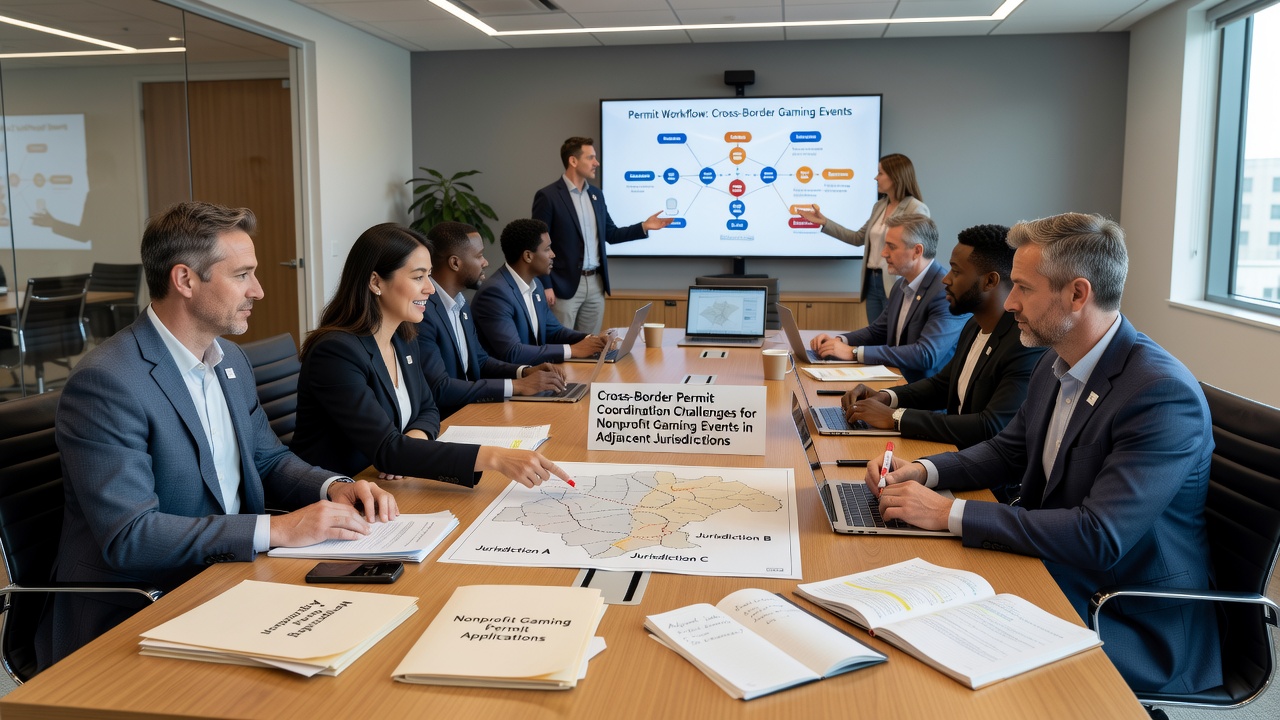
Cross-Border Permit Coordination Challenges for Nonprofit Gaming Events in Adjacent Jurisdictions
Nonprofit organizations that run gaming events such as bingo or raffles in areas where state or provincial lines sit close together often face layers of permit rules that differ from one jurisdiction to the next, and those variations create coordination hurdles that stretch planning timelines and raise administrative costs. Data from regulatory filings shows that events planned near borders require separate applications, background checks, and financial disclosures for each side, even when the venue sits within a short drive of both. Researchers at state gaming oversight offices have documented cases where a single event needed approvals from as many as four separate agencies because the nonprofit drew participants from multiple adjacent areas.
Regulatory Variations Across Adjacent Areas
Each jurisdiction sets its own standards for who may hold a gaming license, how proceeds must be tracked, and what percentage of funds reaches the charitable cause, so nonprofits must map every requirement before submitting paperwork. One study compiled by the National Conference of State Legislatures revealed that age limits for players range from 18 to 21 across neighboring states, while advertising rules can prohibit online promotion in one location yet permit it in another. Those differences force organizers to adjust ticket sales methods, venue signage, and even prize structures to stay compliant on both sides of the line.
Application Timelines and Documentation Overlaps
Permit applications in adjacent jurisdictions rarely share a common deadline or form, which means staff members duplicate efforts when they prepare financial statements, volunteer lists, and tax filings for each authority. Observers note that processing times vary from 30 days in some states to 90 days in others, and any mismatch in submission dates can push an entire event schedule back by weeks. When an organization operates near a state line, it must often schedule separate public hearings or site inspections, adding travel expenses and coordination time that smaller nonprofits struggle to absorb.
Coordination Mechanisms and Their Limits
Some border regions have created informal working groups that let regulators share basic applicant data, yet these arrangements stop short of joint approvals or unified reporting portals. In October 2026, representatives from several Midwestern and Northeastern gaming boards met to discuss pilot programs that would allow simultaneous review of multi-state applications, though full implementation remains years away according to meeting summaries. Nonprofits that have tested early versions of shared databases report fewer duplicate requests for the same documents, but they still must navigate separate fee schedules and renewal cycles on each side of the border.

Financial Reporting and Audit Requirements
Charitable gaming laws require detailed tracking of every dollar raised and spent, yet adjacent jurisdictions often demand different formats for those reports and different deadlines for submission. A report issued by the Alcohol and Gaming Commission of Ontario highlights how Canadian provinces along the U.S. border impose currency conversion rules and cross-border fund transfer disclosures that add steps for any U.S.-based nonprofit drawing Canadian participants. Those who manage events in both countries must maintain parallel accounting systems to satisfy auditors on either side, and any discrepancy triggers additional review cycles that delay final tax filings.
Practical Examples from Recent Events
Take one nonprofit that staged a multi-day bingo tournament straddling two states last year; staff submitted 14 separate forms, attended three public meetings, and paid licensing fees totaling more than 12 percent of projected proceeds. Another organization that planned a raffle across a state line discovered mid-process that one jurisdiction required a local fiscal agent while the other accepted direct applications from the charity itself, forcing last-minute restructuring of vendor contracts. Figures compiled by academic researchers at the University of Nevada show that such administrative burdens have grown steadily as more states tightened charitable gaming oversight after 2023.
Emerging Tools and Future Outlook
Digital platforms that standardize forms across multiple jurisdictions have begun to appear, yet adoption remains uneven because each regulatory body retains final authority over its own rules. Those who track legislative dockets note that several border states introduced bills in 2025 aimed at reciprocal recognition of certain background checks, though passage rates vary and full reciprocity still requires legislative action on both sides. Nonprofits that stay in regular contact with licensing offices in each jurisdiction report fewer surprises, while organizations that rely on a single point of contact often encounter conflicts only after substantial resources have already been committed.
Conclusion
Cross-border permit coordination for nonprofit gaming events continues to rest on separate, sometimes overlapping, sets of rules that demand careful mapping and repeated submissions. Regulatory agencies have tested limited sharing arrangements, and new legislative proposals surface each year, yet the core task of aligning timelines, fees, and reporting formats remains the responsibility of the organizing groups themselves. Organizations that build relationships with officials in every affected jurisdiction and maintain parallel compliance systems position themselves to complete events on schedule while meeting every local requirement.