Seasonal Bingo Events Demand Careful Venue Protocol Coordination Across Nonprofit County Networks
Written by Sage Becker · Oct 22, 2026

Seasonal Bingo Events Demand Careful Venue Protocol Coordination Across Nonprofit County Networks
Nonprofit networks that run seasonal bingo events across several counties face layered inspection requirements that vary by jurisdiction, and these demands often include fire safety reviews, accessibility checks, electrical system verifications, and crowd control assessments that must align with each county's local ordinances. Organizations typically schedule events during peak fundraising periods, which means they must coordinate advance inspections with multiple regulatory bodies while ensuring all venues meet uniform standards for participant safety and operational compliance. Data from state charitable gaming reports shows that multi-county operations handle an average of four to six separate inspection cycles per season, and each cycle requires documented proof of adherence to differing county codes.
Understanding Core Inspection Categories
Venue inspections for these events cover structural integrity, emergency exits, sanitation facilities, and gaming equipment placement, and inspectors often examine whether temporary setups such as additional seating or lighting systems interfere with required clearance zones. County health departments verify food service areas when concessions operate alongside bingo sessions, while fire marshals focus on occupancy limits and suppression systems. Researchers at regional nonprofit resource centers have documented that organizations which prepare unified checklists covering every county's specific rules reduce repeat visits by nearly 30 percent compared with those that address each jurisdiction separately.
Coordination Challenges in Multi-County Networks
Nonprofit networks spanning adjacent counties must reconcile differences in permit application timelines, fee structures, and documentation formats, and this process becomes especially intricate when events occur near county lines where overlapping authority sometimes applies. Staff members frequently maintain shared digital repositories that track submission deadlines and inspection outcomes for each location, allowing teams to identify patterns such as recurring electrical concerns in older community halls. In October 2026 several midwestern states plan to introduce synchronized digital filing portals that will let organizations upload inspection results once and distribute them automatically to all relevant county offices, a development expected to streamline administrative workloads significantly.
Preparing Documentation and Staff Training
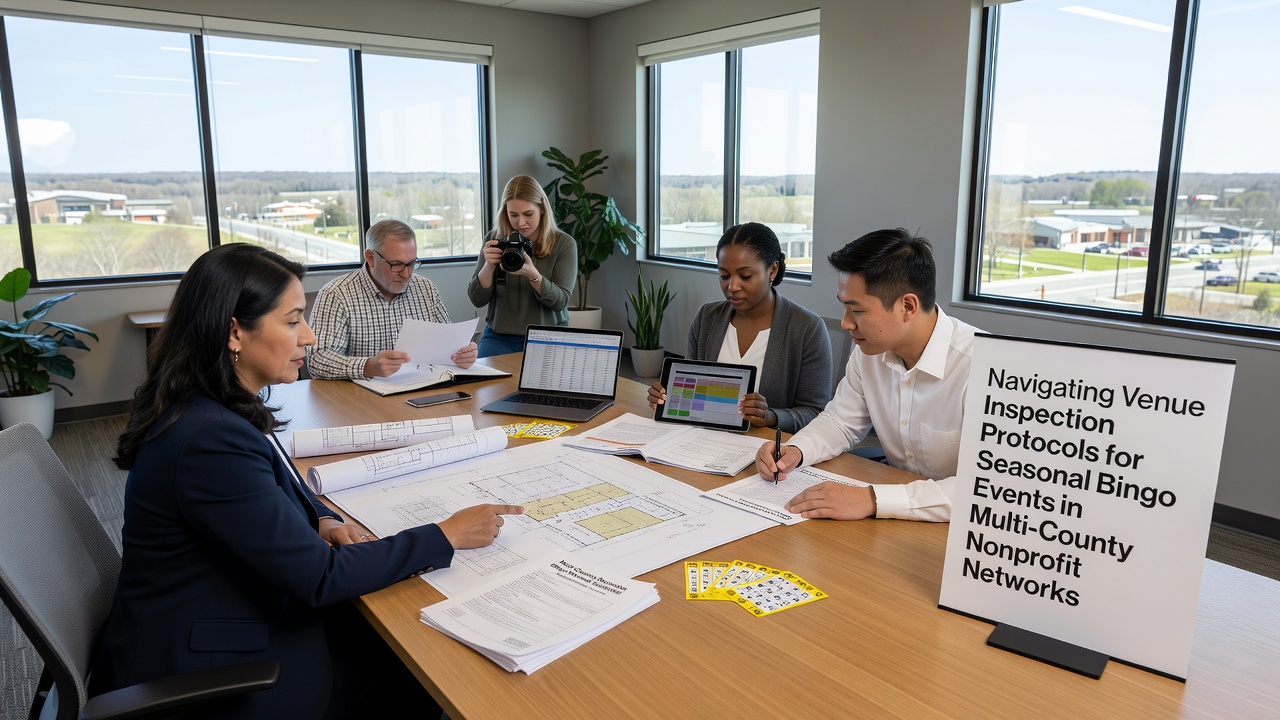
Successful operations compile comprehensive binders or cloud-based folders containing floor plans, vendor contracts, insurance certificates, and prior inspection reports, and these materials travel with mobile teams that rotate among venues. Training programs emphasize recognition of common violations such as blocked exits or inadequate signage, and organizations that conduct internal mock inspections report fewer deficiencies during official visits. According to figures released by the Alcohol and Gaming Commission of Ontario, nonprofits that invest in standardized training modules experience a measurable drop in compliance citations across multi-jurisdictional events.
Technology Tools That Support Compliance
Many networks now deploy mobile applications that allow real-time photo documentation and timestamped notes during walkthroughs, and these tools create audit trails that satisfy multiple counties at once. Scheduling software integrates with county portals to flag upcoming deadlines and automatically generate reminder notifications for responsible staff. One study conducted by a university-affiliated gaming research group found that organizations using integrated platforms completed seasonal preparation cycles 22 percent faster than those relying on paper-based systems.
Case Examples from Recent Seasons
Take one network in the Pacific Northwest that coordinates bingo nights in three counties, and this group discovered that aligning inspection dates with shared vendors reduced travel costs while ensuring consistent equipment quality across sites. Another example involves a southern nonprofit coalition that faced repeated accessibility findings until it revised its layout templates to meet the strictest county standard, after which all locations passed subsequent reviews without modification. Observers note that such proactive standardization often prevents last-minute adjustments that can disrupt event schedules.
Conclusion
Nonprofit networks continue to refine their approaches to venue inspections as regulatory environments evolve, and the upcoming October 2026 portal integrations represent one step toward greater efficiency. Organizations that maintain detailed records, conduct thorough internal reviews, and leverage available technology position themselves to meet requirements across multiple counties while focusing resources on their core fundraising missions. Continued attention to these protocols supports both operational continuity and public confidence in charitable gaming activities.